
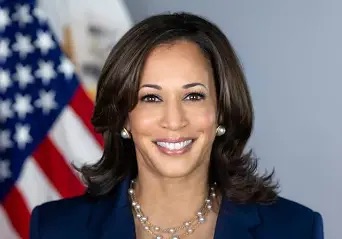
As the US heads towards another election in 2024, we reflect on the Vice Presidency of Kamala Harris. It has been a significant milestone in American politics, especially for women of color. Her ascension to this high office has undeniably had several impacts, both symbolic and substantive, on this demographic. In this discussion, we will explore various dimensions of her Vice Presidency and its influence on women of color in America.
Breaking the Glass Ceiling: A Symbol of Possibility
Kamala Harris’s election as Vice President was historic. As the first woman, the first African American, and the first person of South Asian descent to hold this office, she shattered a very visible glass ceiling in American politics. This symbolic victory cannot be understated. For women of colour across the nation, seeing someone who reflects their identity in one of the highest offices in the land is immensely empowering. It sends a powerful message that women of color can aspire to and achieve the highest political positions.
Role Model Effect
Harris’s presence in the White House serves as a role model effect. Young girls and women of colour can now see themselves reflected in the upper echelons of political power. This visibility may inspire more women of color to engage in politics, either by voting, advocating for policy changes, or running for office themselves.
Policy Influence
As Vice President, Harris has had the opportunity to influence policy. While the Vice President’s role is often seen as more ceremonial, Harris has been actively involved in various policy areas. Her focus on issues such as racial justice, criminal justice reform, and women’s rights directly impacts communities of color. However, it’s important to recognise that policy changes often take time, and the extent of her influence in these areas might be more apparent in the long run.
Representation vs. Policy Achievements
A crucial debate point is the balance between symbolic representation and substantive policy achievements. Some critics argue that while Harris’s election is symbolically important, it needs to translate into concrete policy changes that positively affect women of colour. This perspective suggests that representation alone is not enough; it must be coupled with action and change.
Challenges and Criticism
Kamala Harris’s tenure has not been without criticism. She has faced challenges in addressing complex issues like immigration and criminal justice reform. Some critics argue that her actions have not always aligned with the interests of communities of colour, pointing out that representation does not automatically equate to advocacy for or progress on issues affecting these communities.
Symbolic Representation: This refers to the presence of individuals from underrepresented groups in positions of power. Kamala Harris, as a woman of colour in the Vice Presidency, provides a powerful symbol of diversity and inclusion. Symbolic representation can inspire and empower communities, but it does not guarantee policy changes or advocacy.
Substantive Representation: This involves actively advocating for and implementing policies that address the specific needs and concerns of underrepresented groups. Substantive representation is about the actions and policy decisions that a representative makes, which directly impact the community they represent.
Institutional Limitations: The Vice President’s role, while influential, is often constrained by the broader agenda of the administration and the political dynamics in Congress. Harris’s ability to advocate for specific policies may be limited by these institutional factors.
Diverse Interests: Women of colour are not a monolithic group; they have diverse interests and needs. It can be challenging for one individual, even in a high office, to represent and advocate for the wide range of concerns within these communities.
Expectations vs. Reality: High expectations are often placed on individuals who break barriers. However, the capacity to bring about significant policy changes, especially in a relatively short time, can be limited. This can lead to a gap between expectations from the community and what is realistically achievable.
The Complexity of Intersectional Identities:
Kamala Harris’s identity as a woman of colour encompasses multiple intersecting layers of minority status (gender, race, ethnicity). This intersectionality means that the issues she is expected to advocate for are complex and multifaceted.Intersectional representation requires understanding and addressing the unique challenges faced by people who are at the intersections of multiple marginalised groups.
Long-term Impact vs. Immediate Results:
The impact of representation, especially in terms of advocacy and policy changes, often requires a long-term perspective. Immediate changes may be less visible, but the presence of underrepresented groups in high offices can gradually lead to systemic changes.Harris’s role may pave the way for future leaders from similar backgrounds, potentially leading to a more substantial impact over time.
In summary, while Kamala Harris’s role as Vice President is a significant step for representation, translating this into effective advocacy and tangible progress for communities of colour involves navigating complex political, institutional, and societal dynamics. It highlights the difference between having a seat at the table and being able to influence the decisions made at that table.
 Mosaic Musings
Leave a comment